
Does Window Tint Reduce Heat? A Melbourne Homeowner’s Guide
There is a simple reason many Melbourne homeowners start looking into window tinting: one room in the house gets ridiculously hot.
It might be the west-facing living room that becomes uncomfortable every summer afternoon. It could be a home office where the air conditioner struggles once the sun hits the windows. Or perhaps you have large glass doors that give you a great view but also bring a lot of heat into the house.
So, does window tint actually reduce heat?
Yes. Solar-control window film can reduce the amount of solar energy entering your home through the glass. Depending on the film, the glass and the direction your windows face, that can make sunny rooms more comfortable and reduce the amount of work your cooling system needs to do.
But there is more to it than simply choosing the darkest tint available.
Different films control solar energy in different ways, and the best film for your Melbourne home depends on your windows, how much sunlight they receive and what you want to achieve.
Let’s break it down.
Why do windows make a house so hot?
To understand why window tint works, it helps to understand what is happening at the glass.
Sunlight reaching a window contains different forms of energy, including visible light, ultraviolet radiation and infrared energy.
When sunlight passes through the glass and is absorbed by floors, furniture, walls and other surfaces inside your home, some of that energy is converted into heat.
This is known as solar heat gain.
The amount of heat coming through a window can vary significantly depending on:
- which direction the window faces
- the time of day
- the season
- the size of the glass
- whether there is external shading
- the type of glazing
- surrounding buildings or trees.
For Melbourne homes, west-facing windows are often particularly troublesome.
The afternoon sun sits relatively low in the sky and can strike west-facing glass more directly. This is why a room can feel perfectly comfortable at lunchtime and then become noticeably hotter later in the afternoon.
Large east-facing windows can create similar problems in the morning.
This is also why treating every window in exactly the same way is not always the best approach.
How does window tint reduce heat?
Residential window tint is a thin film applied to the surface of your existing glass.
Depending on the product, the film can reflect, absorb or otherwise control part of the solar energy reaching the window.
The result is that less solar energy enters the room.
Think of it this way.
An untreated window allows a certain amount of incoming solar energy to pass into your home.
A solar-control film changes the performance of that glass so more of that energy is rejected before it becomes heat inside the room.
That doesn’t mean the room will suddenly feel refrigerated.
Window film only addresses heat entering through the glass. The temperature inside your house is also influenced by the roof, walls, insulation, draughts, ventilation, outdoor temperature and other factors.
But if direct sunlight through your windows is a major source of unwanted heat, treating the glass can make a meaningful difference.
You can learn more about the films Tint Minister installs on our house window tinting Melbourne page.
How much heat can window tint reject?
This is where homeowners need to pay close attention to the numbers.
Not every window film performs the same way.
Tint Minister’s current residential range includes three broad solar-control options:
| Film type | Solar heat rejection* | Glare reduction* | UV protection* |
|---|---|---|---|
| High reflective | Up to 80% | Up to 78% | Up to 99% |
| Dual reflective | Up to 71% | Up to 84% | Up to 99% |
| Low reflective | Up to 65% | Up to 72% | Up to 99% |
*Published Tint Minister maximum figures. Actual performance depends on the specific film and glazing combination.
At first glance, you might simply choose the film with the highest number.
But there are trade-offs.
A highly reflective film can provide very strong solar control, but it has a noticeably reflective appearance from outside.
A dual-reflective product can provide strong heat control while giving you a more neutral appearance from inside.
A low-reflective film may suit homeowners who prefer a darker but less mirror-like finish.
The best option therefore isn’t always the product with the largest heat-rejection number. It is the film that balances heat control, natural light, privacy and appearance for your particular home.
Does darker window tint block more heat?
Not necessarily.
This is one of the most common misunderstandings about window tint.
People often assume that if a film looks very dark, it must be better at keeping heat out.
Film darkness is mainly described by Visible Light Transmission, or VLT.
VLT tells you how much visible light passes through the filmed glass.
For example:
- a high VLT allows more visible light into the room
- a low VLT allows less light through and therefore appears darker.
But visible light is only one part of solar energy.
Modern window films use different coatings and technologies to control solar energy, so two films with similar VLT levels can have quite different heat-rejection performance.
You can read our more detailed explanation of what VLT means and how it affects residential window tint.
The practical lesson is simple: don’t choose window film based on darkness alone.
Look at the actual solar-performance figures as well.
What does TSER mean?
One figure worth understanding when comparing window films is TSER, or Total Solar Energy Rejected.
TSER measures the proportion of incoming solar energy that the filmed glass rejects.
Generally, a higher TSER means stronger overall solar-control performance.
You may also see companies advertising very high percentages for infrared rejection.
Infrared performance can be useful information, but it shouldn’t automatically be compared with TSER because they may be measuring different things.
Some infrared claims relate only to a particular range of infrared wavelengths rather than the entire solar spectrum.
That is why two films can both have an impressive-sounding percentage on their brochures while performing differently in the real world.
When comparing products, make sure you are comparing the same measurement.
What is SHGC?
Another term you may come across is Solar Heat Gain Coefficient, or SHGC.
SHGC measures how much solar heat passes through the glazing.
It is normally expressed as a number between 0 and 1.
In simple terms:
lower SHGC = less solar heat entering through the window.
For example, a glazing system with an SHGC of 0.30 allows considerably less solar heat through than one with an SHGC of 0.70 under the relevant test conditions.
SHGC is widely used when assessing window energy performance in Australia.
However, lower isn’t automatically better for every window in every climate.
That matters particularly in Melbourne.
Why Melbourne is a little different
Melbourne has both hot summers and cool winters.
During summer, reducing unwanted solar heat can make west- and east-facing rooms far more comfortable.
During winter, however, sunlight coming through appropriately positioned windows can sometimes be useful.
Australian passive-design guidance recognises this.
A well-positioned north-facing window, for example, can capture lower winter sun while being easier to shade from the higher summer sun.
That means aggressively reducing solar gain on every window in the house may not always produce the best year-round result.
A home with a large west-facing glass wall receiving intense summer sun may benefit from strong solar-control film.
A protected north-facing window providing useful winter sunlight might call for a different approach.
Good window tinting is therefore about solving the problem window rather than blindly applying the same product everywhere.
Which windows should you tint first?
If heat reduction is your priority, start with the rooms that become uncomfortable when the sun is shining.
Common candidates include:
West-facing windows
These are often the biggest problem in Melbourne homes.
Low afternoon sun can create significant heat gain at a time when the outdoor temperature is already high.
Living rooms, kitchens and bedrooms facing west can become noticeably uncomfortable on hot days.
Large east-facing windows
Morning sun can quickly heat rooms with large areas of east-facing glass.
Bedrooms and home offices can be particularly affected.
Floor-to-ceiling glazing
Modern homes often use large panes of glass to bring in natural light and connect indoor and outdoor living areas.
The view can be fantastic, but more exposed glass also means a larger area through which solar energy can enter.
Windows without external shading
A window protected by a verandah, awning or external blind receives very different solar exposure from completely unshaded glass.
If adding external shade isn’t practical, window film may be an option worth considering.
Can window tint reduce air-conditioning use?
Potentially, yes.
If less solar heat enters through the windows, the air conditioner has less heat to remove from the room.
That can reduce the cooling load.
But we would be cautious about promising a particular percentage reduction in your electricity bill.
Your actual energy consumption depends on many things, including:
- your home’s insulation
- air leakage
- window area and orientation
- air-conditioner efficiency
- thermostat settings
- outdoor weather
- how long the system operates
- other sources of heat inside the home.
Window tint should therefore be viewed as one part of improving thermal comfort and efficiency rather than a guaranteed way to cut your power bill by a particular amount.
What about keeping heat inside during winter?
Standard solar-control window film is primarily used to reduce incoming solar heat.
But Melbourne homeowners often have the opposite problem several months later: keeping warmth inside.
That is where Low-E window film becomes interesting.
Low-E means low emissivity.
These films are designed not only to control incoming solar heat but also to reduce radiant heat loss through glazing.
Tint Minister installs Low-E film for homeowners looking for a more year-round approach to window performance.
You can read more in our guide to window film that retains heat in winter and rejects heat in summer.
It is important to understand that Low-E film does not turn ordinary single glazing into double glazing. The two systems work differently.
However, it can be worth considering when replacing existing windows is impractical or outside the budget.
Window tint or blinds: which reduces heat better?
Blinds and window tint are sometimes treated as competing products.
In reality, they can work very well together.
The difference is where they deal with the sunlight.
Window film is applied directly to the glass and helps control solar energy as it passes through the glazing.
An internal blind deals with sunlight after it has already passed through the glass.
Blinds still have many benefits. They are excellent for night-time privacy, controlling room darkness and changing the appearance of a room.
Window film can add heat, glare and UV control while allowing you to keep the blinds open more often.
If you already have window furnishings, read our guide: I have blinds at my house. Why should I consider window tinting?
For many homes, it doesn’t have to be one or the other.
Will heat-reducing tint make my windows look mirrored?
It can, but it doesn’t have to.
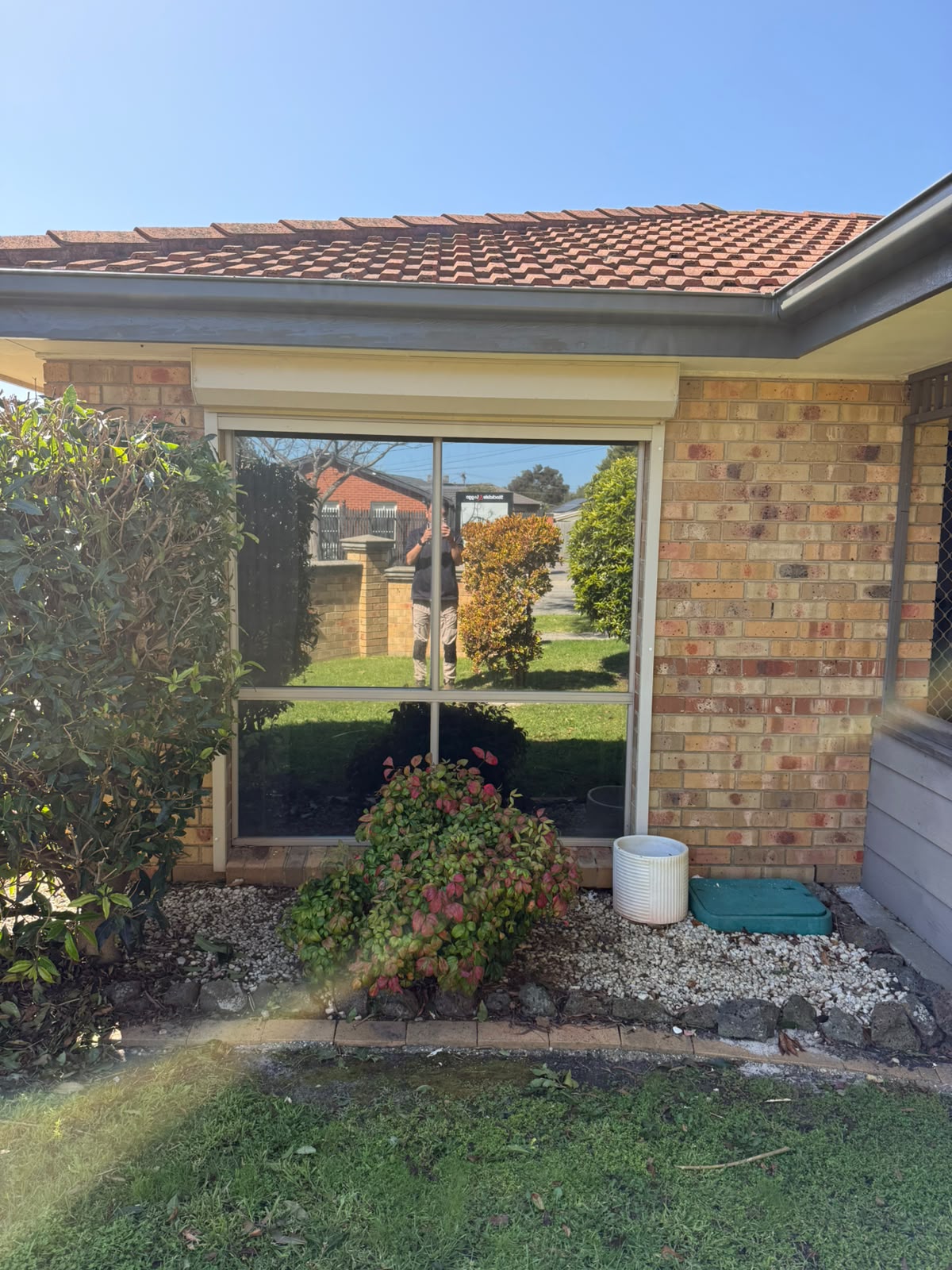
Highly reflective window films are generally among the strongest options for solar control, which is why the familiar silver or mirror appearance is common on buildings exposed to intense sun.
But there are alternatives.
Dual-reflective, low-reflective and spectrally selective films can provide varying levels of solar control with a more neutral appearance.
Tint Minister has previously covered these options in our guide to getting privacy and heat reduction without a silver mirror look.
If appearance matters to you, ask to see actual film samples against your own glass.
That’s much more useful than choosing from a photograph online.
Does window tint also reduce glare?
Yes.
Heat and glare are different problems, but solar-control films commonly address both.
Glare is caused by excessive visible light.
This can become particularly annoying when sunlight falls across:
- televisions
- computer monitors
- kitchen benches
- dining areas
- living rooms.
Reducing visible light transmission can make these rooms far easier to use during sunny periods.
The trade-off is that stronger glare reduction normally means reducing more visible light.
Again, this is where film selection matters.
You want enough glare control to solve the problem without making a naturally dark room unnecessarily gloomy.
What about UV and fading?
Heat isn’t the only reason to control sunlight.
Quality architectural window films can block very high levels of ultraviolet radiation.
Tint Minister’s residential solar-control films are specified to block up to 99% of UV.
This can help protect:
- timber flooring
- carpet
- sofas
- curtains
- photographs
- artwork
- interior finishes.
But no window film can completely stop fading.
UV is one contributor. Visible light and heat also play a role, along with the materials themselves.
Film is therefore better described as helping slow fading rather than eliminating it.
Is reflective tint good for privacy too?
During daylight, reflective films can provide substantial privacy.
When the outside is brighter than the inside, someone looking towards the window primarily sees the reflected outdoor environment, while you can still see outside from the darker side.
But this effect depends on lighting conditions.
Once it becomes dark outside and you turn the lights on inside, the relationship reverses.
That means reflective tint should not be sold as permanent one-way privacy.
If privacy is needed day and night, window frosting or a combination of film and window furnishings may be more suitable.
Can every window be tinted?
Most types of architectural glass can have an appropriate film applied, but not every film is appropriate for every pane of glass.
Some solar-control films absorb substantial amounts of solar energy.
That energy can increase the glass temperature.
Under certain conditions, uneven heating can create thermal stress.
Film selection therefore needs to consider:
- annealed or toughened glass
- laminated glass
- single or double glazing
- Low-E coatings
- glass thickness
- pane dimensions
- shading
- edge condition
- window orientation.
Double-glazed and Low-E windows require particular care.
If your windows are still covered by a manufacturer’s warranty, you should also check whether aftermarket film affects that warranty.
A professional installer should assess the glass before recommending the film.
Is window tint worth it for heat reduction?
If solar heat through the glass is one of the main reasons a room becomes uncomfortable, window film can be a practical solution.
It allows you to work with the windows you already have rather than automatically replacing them.
It can also address several problems at once:
- solar heat
- glare
- UV exposure
- daytime privacy
- fading of interiors.
The important thing is not to treat window tint as a one-size-fits-all product.
A hot west-facing lounge room may call for strong solar rejection.
A north-facing room that benefits from winter sunlight could need a different film.
A homeowner who hates mirrored glass may prefer a dual-reflective or lower-reflective option.
And someone particularly concerned about winter heat loss may want to discuss Low-E film instead.
Frequently asked questions about heat-reducing window tint
How much cooler will my house be after window tinting?
There isn’t one temperature reduction that can be guaranteed for every home. The result depends on the film, glass, window size, orientation, shading, insulation and weather. What window film can do is reduce solar energy entering through the treated glass.
Which tint blocks the most heat?
Within Tint Minister’s currently published residential range, high-reflective film provides the highest maximum stated solar heat rejection at up to 80%, followed by dual reflective at up to 71% and low reflective at up to 65%. The right choice should also consider appearance, light and glass compatibility.
Does 5% tint reject more heat than 35% tint?
Not automatically. Those percentages normally describe visible light transmission rather than total solar heat rejection. Film construction and solar-performance specifications need to be compared separately.
Does clear window film reduce heat?
Some relatively light or near-clear spectrally selective films can reduce solar heat while allowing high levels of visible light to pass through. A film doesn’t necessarily need to look very dark to provide solar control.
Does tint stop heat at night?
Solar-control film mainly addresses heat from solar radiation. There is no sun at night, so conventional solar film does not perform the same role. Low-E films are designed to reduce radiant heat transfer and may be more appropriate where winter heat retention is a priority.
Should I tint every window in my house?
Not necessarily. Start with the windows causing the biggest heat, glare or privacy problems. Orientation and seasonal solar gain should be considered before deciding whether the same film belongs on every elevation.
Choose window film based on your home, not just a percentage
The biggest number on a film brochure doesn’t automatically make it the best product for your house.
A good result comes from understanding what is making the room uncomfortable in the first place.
Which direction does the glass face?
When does the heat become a problem?
Do you want to keep as much natural light as possible?
Is privacy important?
Do you like reflective glass?
Is the window single glazed, double glazed or Low-E?
Once those questions are answered, choosing the right film becomes much easier.
Tint Minister provides residential window tinting across Melbourne and can assess your windows before recommending an appropriate solar-control film.
If you have a room that becomes uncomfortable whenever the sun comes out, get a free quote and tell us which windows are causing the problem. We can help you understand the options and choose a film that suits your glass, your home and the way you want the room to feel.